Find simple parenting tips for busy mornings, big feelings, and the moments in between. Explore guides by age, get ideas for everyday routines, and find a printable you can use at home.

Why Children Behave Worse With the Parent They Trust
Understanding the big emotions children save for their safest person.
Read the guide
Why Preschoolers Fall Apart After the School Day
Make the transition from school to home feel gentler.

How to Create a Calm-Down Corner That Feels Safe
Build a supportive space rather than a place for punishment.
FRESH PARENTING GUIDES
Practical answers for real family moments
Three new, in-depth guides with gentle scripts and clear next steps. Pick the one that fits your family today.

When Your Toddler Refuses to Poop on the Potty
Gentle next steps, constipation warning signs, and practical ways to ease pressure.
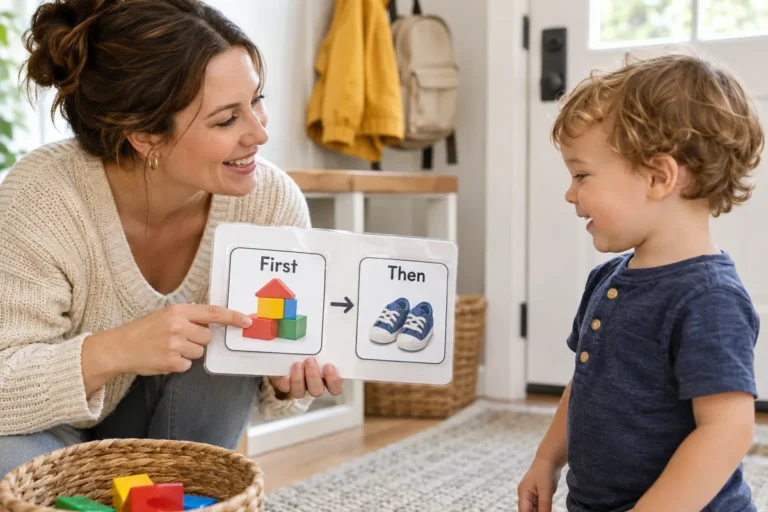
A First–Then Schedule for Easier Transitions
12 ready-to-use scripts for mornings, cleanup, bedtime, and other changes.

A Calm Plan for Preschool Bedtime Fears
Reassuring words, a predictable evening rhythm, and when to seek help.
More helpful guides for your family
Explore the blog →
The Sunday Family Reset: A Calmer Week Starts Here
Small habits to make everyday life feel easier.

Third Trimester Checklist: What to Do and When
Practical preparation for the weeks before birth.

Toddler Independence Without the Everyday Battles
Offer age-appropriate choices and space to try.
Browse by topic
Browse the guides →Small changes make calmer days.
Parenting doesn’t need another impossible checklist. Start with one routine, one simple script, or one moment of connection. Build on what works for your child.
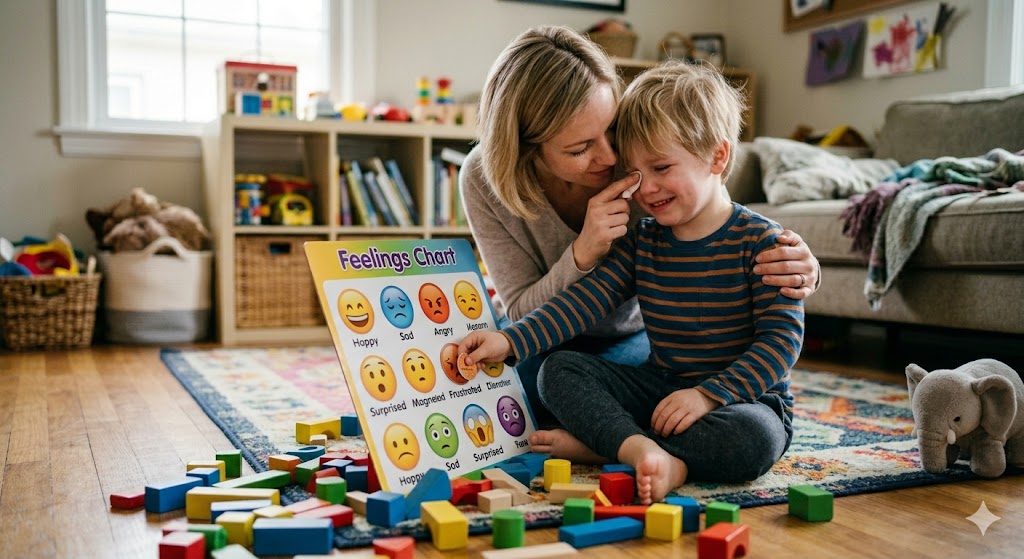 FREE FAMILY TOOLS
Free tools for calmer family days
Start with a printable feelings chart or a simple routine chart. Choose one tool, try it together this week, and keep what works for your family.
Explore free parenting printables →7 Simple Parenting Tips for Everyday Family Life
These simple parenting tips focus on small, repeatable steps, not on perfect behavior. Choose one idea that suits your child’s age and your family’s needs.
- Connect before correcting. A calm voice and a short moment of attention can help your child feel heard.
- Make the next step predictable. Use a simple visual plan for busy mornings or bedtime, and explore our routine charts.
- Name the feeling. Help children find words for frustration, sadness, or excitement before looking for a solution.
- Offer manageable choices. Let toddlers choose between two appropriate options when possible.
- Keep boundaries kind and clear. Explain the limit briefly and follow through without a long argument.
- Notice small progress. Recognize effort and the moments your child tries again.
- Reset together. At the end of a hard day, reconnect and choose one thing to try differently tomorrow.
Put one tip into practice
Before school: Set a short checklist by the door where your child can see it. Use three steps you already do, such as shoes, bag, and water bottle. For a child who cannot read yet, draw a picture for each step. When the morning gets busy, point to the next picture before adding another reminder.
After a hard moment: Wait until you and your child can talk comfortably. Name what happened in one sentence, listen to what they remember, and agree on one thing to try next time. If the plan feels too big, make the next step smaller.
At the end of the week: Ask what felt easier and what still caused friction. Keep the part that fit your family’s routine. If something was hard to repeat, try changing when or where it happens before adding more steps.
For more simple parenting tips tailored to your child’s age, see the CDC’s positive parenting tips.
Parenting guidance, thoughtfully organized.
Simplee Parenting brings together practical, evidence-informed information for parents of babies through preteens. Our goal is to make it easier to find a helpful guide when you need one.